Choosing the Right Visual Assets: A Practical Guide to Abstract Organic Leaf Elements
In the evolving landscape of digital design, the demand for versatile, high-quality visual assets has never been higher. Designers, marketers, and business owners frequently find themselves searching for resources that balance aesthetic appeal with technical flexibility. One category that has gained significant traction is the Set of Abstract Organic, Leaves Element. This collection offers a blend of natural inspiration and modern abstraction, providing a unique toolkit for various creative projects. However, selecting the right graphic resource requires more than just appreciating its visual style; it involves understanding file formats, resolution capabilities, and how these elements compare to other design alternatives.
This article explores the distinct characteristics of abstract organic leaf sets, evaluates their practical applications, and helps you determine whether this specific type of vector illustration aligns with your project needs. By examining the technical specifications—such as 300 DPI resolution and full editability—and comparing them against raster images or rigid templates, we aim to provide a clear, unbiased perspective for informed decision-making.
Defining the Abstract Organic Aesthetic
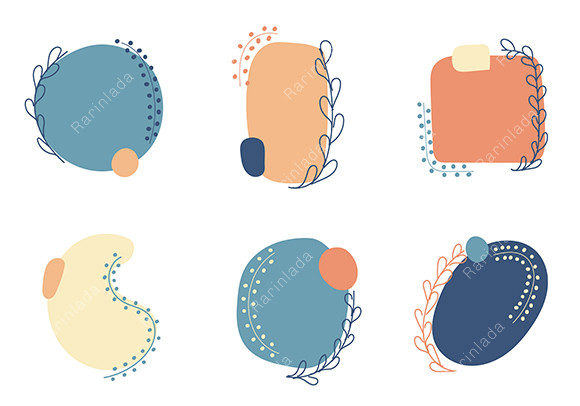
The term "abstract organic" refers to shapes and forms that mimic nature but are simplified, stylized, or deconstructed. Unlike photorealistic botanical illustrations, which strive for exact biological accuracy, abstract leaf elements focus on flow, curvature, and mood. A Set of Abstract Organic, Leaves Element typically includes a variety of shapes that evoke the feeling of foliage without being tied to a specific plant species. This ambiguity is precisely what makes them so versatile.
These elements are distinct from traditional clip art or stock photography in several ways. First, they are designed to be modular. You can rotate, resize, and recolor individual leaves to create custom compositions. Second, the abstract nature allows them to fit into diverse brand identities, from minimalist tech startups to eco-friendly wellness brands. The lack of rigid detail means they do not clash with text or other graphic elements, making them ideal for backgrounds, overlays, and accent pieces.
When evaluating such a set, it is crucial to look at the quality of the vectors. High-quality sets, such as those offered in EPS Version 10 format, ensure that every curve is smooth and every anchor point is logically placed. This technical precision allows for seamless editing in professional software like Adobe Illustrator or Corel Draw, giving designers complete control over the final output.
Vector vs. Raster: Understanding the Technical Advantage
One of the most critical decisions in digital design is choosing between vector and raster graphics. A Set of Abstract Organic, Leaves Element provided as 100% vector graphics offers significant advantages over raster-based alternatives like JPEGs or PNGs, particularly when scalability is a concern.
Vectors are mathematical representations of images. This means they can be scaled infinitely without losing quality. Whether you are printing a small business card or a large conference banner, the lines remain crisp and clean. In contrast, raster images are made of pixels. Enlarging a raster image often results in pixelation and blurriness, which can undermine the professionalism of your design. The inclusion of JPG files in the package serves as a convenient preview or quick-use option, but the core value lies in the EPS files.
Furthermore, the specification of 300 DPI (dots per inch) is vital for print materials. While screen displays typically require only 72 DPI, print demands higher resolution to ensure sharpness. A vector file inherently supports high-resolution output, but confirming that the accompanying raster previews or exports meet the 300 DPI standard ensures compatibility with professional printing services. This dual-format approach—vector for editing and high-res JPG for immediate use—provides a comprehensive solution for both digital and print workflows.
Comparing Use Cases: When to Choose Organic Shapes
Not every project benefits from abstract organic elements. Understanding where these graphics excel compared to other styles can help you allocate your design budget effectively. Below, we compare the suitability of abstract leaf sets against other common design resources.
- Brand Identity and Logos: Abstract leaves are excellent for logos that aim to convey growth, nature, health, or sustainability. Their simplicity allows for easy recognition. However, if your brand requires a literal representation of a specific product, a custom illustration might be more appropriate.
- Social Media Posts: The trendy nature of organic shapes makes them perfect for social media banners and posts. They add visual interest without overwhelming the message. Compared to complex photographic backgrounds, abstract leaves provide a cleaner canvas for text overlays, improving readability.
- Corporate Presentations: In slide decks, these elements can serve as subtle background textures or section dividers. They are less distracting than detailed photographs and more engaging than plain solid colors. However, for highly technical or data-heavy presentations, minimal geometric shapes might offer a more structured look.
- Invitations and Stationery: For weddings, events, or business cards, organic leaf elements add a touch of elegance and warmth. They are particularly effective in invitation designs where a soft, welcoming tone is desired. Compared to rigid geometric patterns, organic shapes feel more human and approachable.
The key tradeoff here is specificity versus versatility. Abstract organic elements are highly versatile but lack specific narrative detail. If your project requires telling a specific story through imagery, you may need to supplement these elements with photography or custom illustrations.
Evaluating Editability and Workflow Integration
The true value of a graphic asset often lies in how easily it integrates into your existing workflow. A Set of Abstract Organic, Leaves Element that is fully editable empowers designers to tailor the assets to their specific needs. This level of customization is a significant advantage over pre-made templates that offer limited flexibility.
With files compatible with Adobe Illustrator and Corel Draw, users can adjust colors to match brand guidelines, modify shapes to fit unique layouts, or combine elements to create new compositions. The inclusion of 100 vector elements provides a broad library to work with, reducing the time spent searching for additional resources. This efficiency is particularly valuable for agencies or freelancers managing multiple projects with tight deadlines.
However, it is important to note that working with vectors requires a certain level of technical skill. Users unfamiliar with bezier curves or layer management may find the learning curve steep. In such cases, the included JPG files offer a simpler, albeit less flexible, alternative. For those seeking a middle ground, some design platforms allow for basic color changes to vector-like assets without requiring deep technical knowledge, though they rarely match the precision of native vector editing.
Decision Factors: Is This Set Right for You?
Before purchasing or downloading a Set of Abstract Organic, Leaves Element, consider the following factors to ensure it meets your requirements:
- Project Scope: Are you creating a single item or a comprehensive brand suite? A large set of 100 vectors is cost-effective for extensive projects but may be excessive for a one-off design.
- Technical Proficiency: Do you have access to and knowledge of vector-based software? If not, the benefits of full editability may go unused, and a simpler raster-based template might be more practical.
- Aesthetic Alignment: Does the abstract style align with your brand voice? While trendy, abstract organic shapes may not suit industries that require a strictly corporate or industrial aesthetic.
- Output Requirements: Will your designs be printed? Ensure that the 300 DPI resolution and vector format align with your printer’s specifications. For web-only use, the vector format still offers benefits in terms of file size and scalability across different devices.
In conclusion, a Set of Abstract Organic, Leaves Element represents a powerful resource for designers seeking flexibility, quality, and modern aesthetics. By offering high-resolution, fully editable vector files, these sets bridge the gap between artistic expression and technical precision. While they may not be the ideal choice for every scenario, their versatility makes them a valuable addition to any designer’s toolkit. By carefully evaluating your project needs, technical capabilities, and aesthetic goals, you can determine whether this resource is the right fit for your creative endeavors.