Strategic Application of Profile People Portraits in Modern Digital Branding
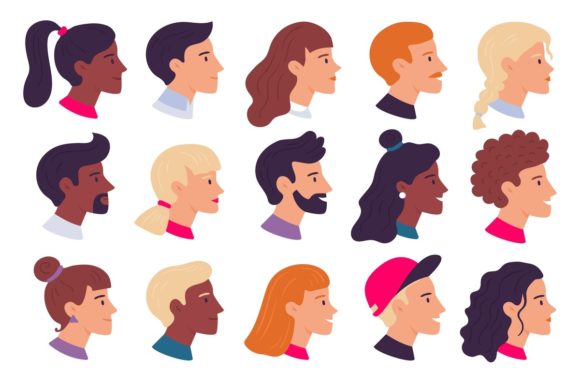
In the crowded digital landscape, visual identity is often the first point of contact between a brand and its audience. While photography offers authenticity, it frequently lacks the versatility required for scalable design systems. This is where Profile People Portraits emerge as a critical asset for entrepreneurs, marketers, and content creators. These are not merely decorative images; they are functional tools designed to convey personality, demographic context, and brand tone without the logistical overhead of custom photoshoots. When utilized with strategic intent, isolated flat vector illustrations of male and female face profiles can significantly enhance user experience, streamline operations, and reinforce brand positioning.
The core value of Profile People Portraits lies in their adaptability. Unlike raster-based photographs that degrade when resized or clash with specific color palettes, vector assets—such as those provided in EPS10 format—offer infinite scalability. Whether you are designing a mobile app icon, a massive billboard, or a detailed presentation deck, the crisp lines of a side portrait or head avatar remain consistent. For decision-makers managing multiple platforms, this consistency is paramount. It ensures that the visual language remains cohesive across touchpoints, fostering trust and recognition among users.
Aligning Visual Assets with Strategic Goals
Integrating Profile People Portraits into your workflow should never be an afterthought. Instead, it requires a deliberate approach aligned with your broader business objectives. Consider the goal of user onboarding. A generic stock photo might feel impersonal or staged, potentially creating a disconnect. However, a well-chosen hipster character portrait or a professional side profile can humanize the interface while maintaining a stylized aesthetic that matches your brand guidelines. This balance helps in reducing cognitive load for the user, allowing them to focus on the task at hand rather than being distracted by inconsistent visual elements.
For educators and publishers, these assets serve as powerful storytelling devices. When explaining complex concepts or depicting user personas, using a set of diverse avatars allows you to represent different demographics without resorting to stereotypes. The ability to isolate elements within a vector editor like Adobe Illustrator means you can customize these portraits to fit specific narratives. Perhaps you need to remove a specific accessory to match a corporate dress code or alter a color to align with a seasonal campaign. This level of control transforms static images into dynamic components of your communication strategy.
Operational Efficiency and Scalability
From an operational standpoint, relying on a curated set of Profile People Portraits drastically reduces production time and costs. Organizing a photoshoot involves hiring models, securing locations, managing lighting, and conducting post-production editing. In contrast, a high-quality vector set provides immediate access to a wide range of characters. For freelancers and small business owners operating with lean budgets, this efficiency is a competitive advantage. It allows resources to be allocated toward product development or customer acquisition rather than content creation logistics.
Furthermore, the technical specifications of these files play a crucial role in long-term usability. A standard delivery often includes a JPEG at 72ppi for quick web use and an EPS10 file for deep editing. Understanding the distinction is vital for practical application. The JPEG is suitable for immediate deployment on websites or social media where speed is essential. However, the EPS10 file is the strategic reserve. It holds the mathematical paths that define the image, allowing for non-destructive editing. If your brand evolves and your primary color shifts from blue to green, you can update every instance of your avatar set in minutes rather than days.
Risk Management in Visual Decision-Making
Despite their utility, there are risks associated with using Profile People Portraits without a clear framework. The most common pitfall is the "clip art" effect, where overused or poorly integrated illustrations make a brand appear amateurish or disjointed. This happens when assets are selected randomly rather than chosen to support a specific narrative or brand voice. To mitigate this, practitioners must establish a style guide before implementation. Define the line weight, color palette, and emotional tone of the portraits you select. Ensure that the hipster character does not clash with the serious tone of a financial report, or that a casual side portrait fits appropriately within a healthcare context.
Another consideration is diversity and representation. In a global market, your audience expects to see themselves reflected in your branding. Relying on a limited set of avatars can inadvertently signal exclusion. Strategic planning involves auditing your visual library to ensure it encompasses a broad spectrum of ages, genders, and styles. When you have the ability to edit vector elements, take the initiative to create variations that better represent your specific customer base. This thoughtful curation demonstrates cultural competence and enhances customer experience.
Practical Implementation Strategies
To maximize the return on investment from these assets, consider the following practical approaches:
- Audit Your Current Visuals: Before downloading new assets, review your existing materials. Identify gaps where Profile People Portraits could replace low-quality images or fill voids in your user journey maps.
- Master the Tools: Invest time in learning the basics of Adobe Illustrator or similar vector editors. Knowing how to manipulate the EPS10 files unlocks the true potential of these assets, allowing you to separate heads from bodies, change backgrounds, or modify accessories.
- Contextualize Usage: Map out where each type of portrait will live. Use side profiles for navigation menus where space is limited, and full head avatars for team pages or testimonial sections where personality is key.
- Maintain Consistency: Once a style is chosen, stick to it across all channels. Mixing flat vector icons with realistic 3D renders often creates visual friction that confuses the audience.
For bloggers and content marketers, these portraits offer a unique opportunity to create signature series. You might develop a recurring character that guides readers through tutorials or explains industry news. This builds a sense of familiarity and loyalty, turning passive readers into engaged community members. The key is consistency in application; the character should appear regularly enough to become recognizable but varied enough to keep the content fresh.
Long-Term Value and Brand Equity
The ultimate measure of success in using Profile People Portraits is the accumulation of brand equity. Over time, consistent visual cues become synonymous with your brand identity. Think of major tech companies that utilize distinct illustration styles; these choices are not accidental but are the result of rigorous strategic planning. By adopting a disciplined approach to selecting and editing your avatars, you contribute to a cohesive brand story that resonates with your audience.
Moreover, the flexibility of vector assets future-proofs your branding. As design trends shift from flat design to more dimensional styles, or as screen resolutions increase, your vector library remains relevant. You are not locked into a specific pixel dimension or resolution. This longevity is a crucial factor for businesses aiming for sustainable growth. It prevents the need for frequent, costly rebrands simply because image formats became obsolete.
In conclusion, Profile People Portraits are more than just digital decorations; they are strategic instruments for communication and brand building. Whether you are an entrepreneur launching a startup, a marketer refining a campaign, or an educator developing course materials, the thoughtful integration of these assets can drive better results. By focusing on goals, understanding the technical capabilities of vector files, and avoiding the trap of random selection, you can leverage these illustrations to create a compelling, professional, and enduring visual identity. The decision to use them should be grounded in a desire for clarity, efficiency, and connection, ensuring that every profile view contributes meaningfully to your overarching mission.