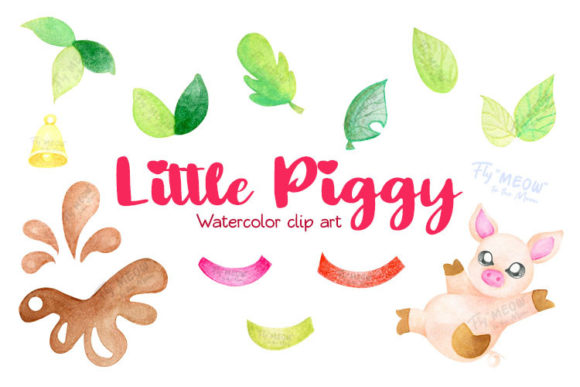
Strategic Branding with Watercolor Little Piggy Clip Art: A Guide for Creators
In the crowded digital marketplace, visual differentiation is not merely an aesthetic preference; it is a strategic imperative. For entrepreneurs, marketers, and content creators, the choice of graphical assets can significantly influence brand perception, user engagement, and ultimately, conversion rates. Among the myriad of design resources available, Watercolor Little Piggy Clip Art has emerged as a versatile tool for those seeking to inject warmth, authenticity, and approachability into their projects. Unlike sterile vector graphics or generic stock photography, hand-painted watercolor elements offer a texture and organic quality that resonates deeply with modern audiences who crave human connection in a digital world.
Integrating a Watercolor Pig Clipart Set into your workflow requires more than simply downloading files and placing them on a canvas. It demands a thoughtful approach to how these assets align with your broader communication goals. Whether you are designing invitations for a boutique event, creating educational materials for young learners, or developing a cohesive brand identity for a small business, the intentional use of these 300 DPI high-resolution images can elevate the perceived value of your output. This article explores the strategic utility of these assets, offering practical guidance on planning, execution, and risk mitigation to ensure your creative investments yield long-term results.
The Strategic Value of Organic Aesthetics in Modern Design
The shift towards "human-centric" design has made hand-painted elements increasingly valuable. When a potential customer encounters a brand utilizing Watercolor Little Piggy Clip Art, the immediate psychological response is often one of softness, creativity, and care. This is particularly effective for businesses targeting demographics that value artisanal quality over mass production. The irregular edges, subtle color variations, and fluid lines inherent in watercolor art signal that thought and effort have been invested in the presentation.
From a branding perspective, these assets serve as powerful differentiators. In sectors such as early childhood education, party planning, and lifestyle blogging, standing out is crucial. A Little Piggy motif rendered in watercolor can soften a corporate message, making it more accessible, or add a whimsical touch to a product line that might otherwise feel utilitarian. The key lies in understanding that these images are not just decorations; they are communication tools that convey tone before a single word is read.
Furthermore, the versatility of a comprehensive clip art set allows for consistent thematic development across various touchpoints. By using the same stylistic elements on your website, social media graphics, and physical merchandise like t-shirts or stickers, you create a unified visual language. This consistency builds recognition and trust, essential components for any successful venture. The 13 unique images included in a typical high-quality set provide enough variety to prevent monotony while maintaining a cohesive look and feel.
Planning Your Creative Deployment for Maximum Impact
Before integrating Watercolor Little Piggy Clip Art into your projects, a strategic assessment of your objectives is necessary. Randomly inserting cute graphics without context can dilute your message and confuse your audience. Instead, approach the usage of these assets with a clear plan that considers your target audience, platform constraints, and desired emotional response.
Consider the following planning framework when deploying these assets:
- Audience Alignment: Does the whimsical nature of a watercolor pig resonate with your specific demographic? For baby clothes, nursery decor, or children's stationery, the fit is natural. For more serious B2B contexts, consider using these elements sparingly, perhaps only in internal communications or specific campaign themes where approachability is the goal.
- Platform Optimization: While the source files are high-resolution (300 DPI), ensure you export them correctly for their final destination. Web designs require optimized file sizes to maintain loading speeds, whereas print products like posters and greeting cards demand the full resolution to preserve the delicate watercolor textures.
- Contextual Relevance: Ensure the imagery supports the narrative. A pig illustration might symbolize savings in a financial literacy blog for kids, or represent a farm-to-table ethos in a food-related project. The metaphor should strengthen your core message.
Effective planning also involves technical preparation. Since these are digital products delivered as ZIP files containing separate PNGs with transparent backgrounds, your workflow should include an organized asset management system. Extract the files immediately upon download and categorize them by theme or usage intent. This operational efficiency prevents last-minute scrambling and ensures you always have the right element ready for deployment.
Practical Applications Across Industries and Mediums
The utility of a Watercolor Pig Clipart Set extends far beyond simple decoration. When used strategically, these elements can enhance functionality and user experience across a wide array of applications. Below are several high-value use cases where these assets drive tangible results:
- Educational Materials and E-Learning: Educators and publishers can utilize these friendly characters to make complex topics more engaging for young learners. Incorporating watercolor pigs into worksheets, flashcards, or digital learning modules can reduce anxiety and increase retention rates. The soft aesthetic creates a safe and inviting learning environment.
- Event Marketing and Invitations: For event planners specializing in baby showers, first birthdays, or rustic-themed parties, these clip arts are indispensable. They allow for the creation of bespoke invitations, banners, and thank-you cards that feel personal and curated rather than template-driven. This attention to detail often justifies premium pricing for event services.
- Product Merchandising: Small business owners selling DIY crafts, planners, or apparel can leverage these designs to create unique product lines. Printing these high-quality images on t-shirts, tote bags, or stickers adds immediate artistic value. Because the background is transparent, the integration into various product mockups is seamless, reducing design time and accelerating time-to-market.
- Digital Content and Blogging: Bloggers and content marketers can use these images to break up text-heavy posts, illustrate listicles, or serve as featured images. The unique style helps in building a recognizable brand identity on social media platforms like Pinterest and Instagram, where visual appeal drives click-through rates.
In each of these scenarios, the goal is not just to make things "look nice," but to use the visual asset to solve a problem—whether that problem is low engagement, bland branding, or a lack of emotional connection with the audience.
Risk Management and Quality Considerations
While the benefits of using Watercolor Little Piggy Clip Art are significant, there are risks associated with improper usage. One common pitfall is the mismatch between digital display and physical print. As noted in product descriptions, colors may vary due to differences in monitor calibration and printer capabilities. A strategic creator anticipates this variance. If you are producing physical goods like greeting cards or clothing, it is advisable to order a proof or test print before committing to a large run. This step ensures that the delicate hues of the watercolor translate accurately to the physical medium, preserving the integrity of your brand.
Another risk is over-saturation. Because these assets are popular, there is a chance that competitors might use similar imagery. To mitigate this, focus on customization. Use photo editing software like Photoshop to adjust hues, combine elements in novel ways, or integrate the clip art with other design components to create a composite image that is unique to your brand. Do not rely solely on the raw files; add your own creative layer to ensure distinctiveness.
Additionally, be mindful of licensing and usage rights. Even though these are instant download digital products, understanding the scope of your license is critical for commercial projects. Ensure that your intended use—whether for resale on physical products or inclusion in digital templates—complies with the creator's terms. Protecting your business from legal complications is as important as the design itself.
Executing with Precision: Technical Best Practices
To fully leverage the quality of a Watercolor Pig Clipart Set, technical proficiency is required. The included files are typically in PNG format with transparent backgrounds, which is ideal for layering. However, maximizing their potential involves a few best practices:
- Resolution Management: Always start with the original 300 DPI files. Downscale only when necessary for web use to avoid pixelation. Never upscale a low-resolution version, as this will destroy the watercolor texture and look unprofessional.
- Color Correction: Be prepared to perform minor color corrections to match your specific brand palette. The beauty of watercolor is its variability, but your brand needs consistency. Adjusting saturation or brightness can help the pig illustrations harmonize with your existing logo and typography.
- File Organization: Keep your original ZIP file and extracted PNGs backed up. Digital assets are an investment; losing them means losing the ability to maintain consistency in future updates or reprints.
Ultimately, the decision to use Watercolor Little Piggy Clip Art should be driven by a desire to enhance communication and build a more relatable brand presence. By approaching these assets with a strategist's mindset—planning carefully, understanding the medium, and mitigating risks—you transform simple images into powerful tools for growth. Whether you are a freelancer looking to impress a client or a business owner aiming to refine your product packaging, the thoughtful application of these hand-painted elements can be the catalyst for achieving superior creative and commercial outcomes.