Strategic Branding with Watercolor Vintage Clipart: A Guide to Intentional Design
In the crowded landscape of modern digital and print media, establishing a distinct visual identity is less about following trends and more about curating an atmosphere that resonates with your audience. Watercolor vintage clipart has emerged as a powerful asset for creators who understand that aesthetics drive engagement. However, the true value of these assets lies not merely in their availability, but in how strategically they are deployed to support broader business goals, from brand positioning to customer experience.
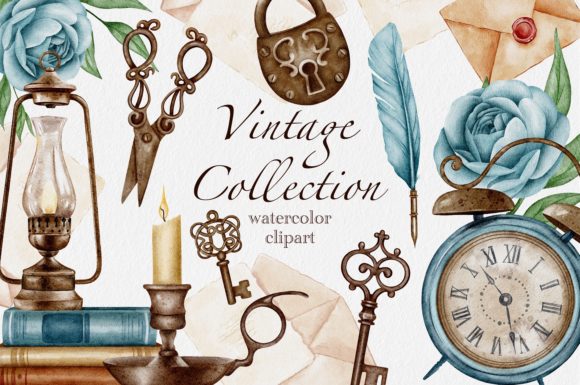
When you acquire a high-resolution set of watercolor vintage elements clipart, such as a collection featuring 16 individual files at 300 DPI, you are not just buying images; you are investing in a versatile toolkit for communication. These elements, typically rendered in soft, organic textures with a nostalgic palette, offer a bridge between the authenticity of handcrafted art and the efficiency of digital production. For entrepreneurs, marketers, and small business owners, the decision to integrate these visuals should be grounded in a clear understanding of how they influence perception and behavior.
Defining the Strategic Value of Vintage Aesthetics
At its core, watercolor vintage clipart represents a specific design language. It evokes feelings of warmth, tradition, and approachability. Unlike the sharp, sterile lines of corporate minimalism or the chaotic energy of neon pop-art, vintage watercolor styles suggest a slower pace and a human touch. This psychological impact is critical when planning your brand's narrative.
Consider the implications for a café owner designing a new menu. The choice of imagery sets the expectation for the product before a single word is read. Using watercolor vintage elements clipart featuring botanical illustrations or rustic kitchenware signals artisanal quality and care. It suggests that the coffee is brewed with patience and the pastries are made from scratch. This is not accidental; it is a calculated move to align visual cues with operational realities. If your business model relies on speed and automation, this aesthetic might create a dissonance that confuses customers. Therefore, the first step in utilizing these assets is an honest audit of your brand promise.
Aligning Visuals with Business Goals
The utility of watercolor vintage clipart extends across various sectors, but its application must always serve a specific objective. Whether you are a freelancer creating stationery, an educator developing learning materials, or a publisher designing book covers, the goal is consistency. A disjointed visual strategy dilutes brand recognition. When you have a cohesive set of 16 high-resolution PNG files with transparent backgrounds, you have the foundation for a unified look across all touchpoints.
Strategic deployment involves mapping these assets to your customer journey:
- Awareness: Use eye-catching posters and social media graphics to stop the scroll. The unique texture of watercolor stands out against the flat colors of standard digital ads.
- Consideration: Employ detailed elements in brochures or web designs to provide depth and encourage longer engagement times.
- Conversion: Apply subtle accents to gift tags, packaging, or checkout pages to reinforce trust and add a premium feel to the transaction.
- Retention: Utilize these visuals in loyalty cards or thank-you notes to create an emotional connection that encourages repeat business.
Practical Applications Across Industries
The versatility of watercolor vintage elements clipart allows for adaptation in diverse contexts. For instance, in the realm of event planning, these assets are indispensable for creating immersive experiences. A wedding planner might use floral motifs for invitations, while a corporate retreat organizer could leverage softer, muted tones to create a relaxing atmosphere for attendees. The key is context. A 3600-pixel image offers the flexibility to be scaled down for a delicate sticker or printed large for a fabric backdrop without losing clarity.
For content creators and bloggers, these elements provide a way to break up text and illustrate concepts without the coldness of stock photography. When discussing topics related to wellness, history, or craftsmanship, watercolor vintage clipart acts as a visual metaphor that reinforces the written message. It transforms a standard blog post into a curated editorial piece, increasing the perceived value of the content.
Educators and publishers can also benefit significantly. In textbooks or worksheets, overly complex graphics can distract from learning objectives. Vintage watercolor elements, often characterized by their simplicity and focus on form, can highlight key information gently. They are particularly effective in materials for younger audiences or in subjects like botany and history, where the aesthetic naturally complements the subject matter.
Risks of Unintentional Usage
While the benefits are substantial, relying on watercolor vintage clipart without a clear strategy carries risks. The most common pitfall is overuse. Because these images are charming and easy to apply, there is a temptation to decorate every surface. This can lead to visual clutter, making your communication difficult to parse. A menu crowded with illustrations may obscure pricing and descriptions, frustrating the customer rather than enticing them.
Furthermore, misalignment with brand identity can damage credibility. A tech startup aiming to project innovation and cutting-edge capability might find that a heavy reliance on vintage aesthetics sends the wrong signal, suggesting obsolescence rather than heritage. It is crucial to ask: Does this visual style support my long-term positioning? If the answer is ambiguous, it is better to pause and refine the strategy before proceeding.
Another consideration is the quality of execution. Not all clipart is created equal. Low-resolution images or those with poor transparency masks can make a professional project look amateurish. This is why sourcing high-quality assets, such as those offering 300 DPI resolution and clean PNG formats, is non-negotiable for serious practitioners. The technical specification of the file directly impacts the final output, whether it is a digital banner or a printed fabric pattern.
Planning for Long-Term Impact
To maximize the return on investment from your design assets, adopt a planning mindset. Before opening your design software, define the scope of your project. Identify which pieces of the watercolor vintage elements clipart set will be most effective for your specific needs. Will you focus on floral borders for framing content, or standalone objects for iconography? Having a plan prevents random decoration and ensures every element serves a purpose.
Consistency is the engine of brand recognition. Once you establish a visual rhythm using these clips, maintain it across different mediums. If your website uses a specific leaf motif from the set, echo that same motif in your email newsletters and physical packaging. This repetition builds familiarity. Over time, customers begin to associate that specific visual style with your brand's values and reliability.
Moreover, consider the longevity of the trend. While "vintage" is a recurring theme in design, specific sub-styles rise and fall. Watercolor vintage clipart tends to have a longer shelf life because it taps into a timeless appreciation for traditional art forms. However, to ensure your designs remain relevant, focus on classic compositions rather than fleeting fads. Use the assets to tell a story that transcends the current season.
Decision-Making Framework for Creators
When deciding whether to integrate these elements into a new project, run through a quick strategic checklist:
- Relevance: Does the vintage aesthetic align with the core message of this specific campaign or product?
- Clarity: Will the addition of these graphics enhance readability and navigation, or will it create noise?
- Quality: Are the source files high enough resolution (e.g., 300 DPI) to handle the intended print or display size?
- Uniqueness: How can I manipulate or combine these standard elements to create something distinct for my brand?
- Scalability: Can this visual system grow with my business, or will I need a complete overhaul in six months?
By answering these questions, you move from being a passive consumer of design assets to an active architect of your brand's visual identity. The watercolor vintage elements clipart becomes a tool in your arsenal, used with precision to achieve measurable outcomes.
Conclusion: Intentionality as the Key to Success
Ultimately, the power of watercolor vintage clipart lies in the hands of the user. It is not a magic solution that automatically guarantees success, but rather a high-potential resource that amplifies a well-thought-out strategy. For the thoughtful entrepreneur, marketer, or creator, these assets offer a way to inject soul and character into commercial endeavors.
Whether you are crafting greeting cards, designing web interfaces, or producing fabric patterns, the goal remains the same: to communicate effectively and connect deeply. By approaching watercolor vintage elements clipart with intention, planning, and a clear understanding of your audience, you transform simple images into a cohesive narrative that drives results. Avoid the trap of random decoration. Instead, let every brushstroke and pigment variation serve your broader vision, ensuring that your work not only looks beautiful but performs strategically in the marketplace.